

Draft changes are not live
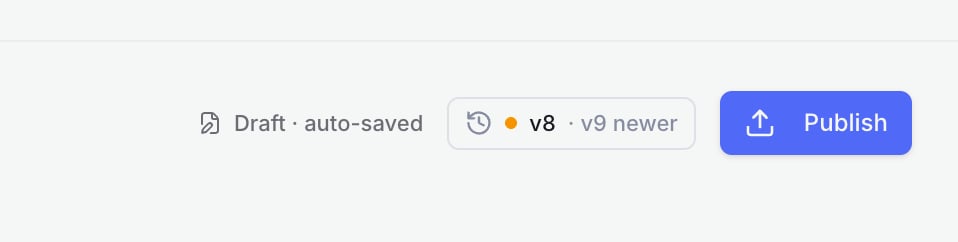
The agent editor shows draft status, the active version, and the Publish button.
How versions work
Each agent has three important parts:Draft testing and Live in production
The rule is simple: the API and triggers always run the active published version, and manual UI runs let you test the draft. The Live in production toggle (in the Version control panel) only changes the default the manual composer pre-selects.
Most people test by running tasks manually in the UI, which uses the draft - no publish needed. When you want the agent to run through the API or a trigger (email, schedule, SharePoint), publish a version; those paths always run the active published version.
Turn Live in production on for agents processing real customer data. It flips the manual composer to default to the active version (so a spot-check sees production behaviour), while you can still pick the draft to test.
Changes that are saved in a version
Most agent setup changes are auto-saved to the draft. When one of these areas is different from the active version, the editor shows a draft status and enables Publish.Changes that are not saved in a version
These changes are saved outside the agent draft. They do not enable Publish unless you also change one of the areas listed above.Legacy analytics settings are an edge case. If a legacy analytics change also enables or disables an agent tool, that tool change can make the draft publishable. Analytics dashboards, questions, and results still remain outside version control.
For a brand-new agent, default tools, default settings, and the automatically created email trigger do not count as user changes by themselves. Publish becomes available after you add your own instructions, reference documents, tools, rules, or other meaningful edits.
Publish a version
Publish when the draft is ready to become a saved version.1
Edit the agent
Update the agent’s instructions, tools, rules, files, triggers, or settings.
2
Select Publish
The Publish button appears when the draft has changes worth saving.
3
Name the version
Add a short name, such as Tightened refund policy or Added vendor lookup.
4
Review changes
Open Review changes to compare the draft with the version it is based on.
5
Publish
Choose Publish vN to create the next numbered version.
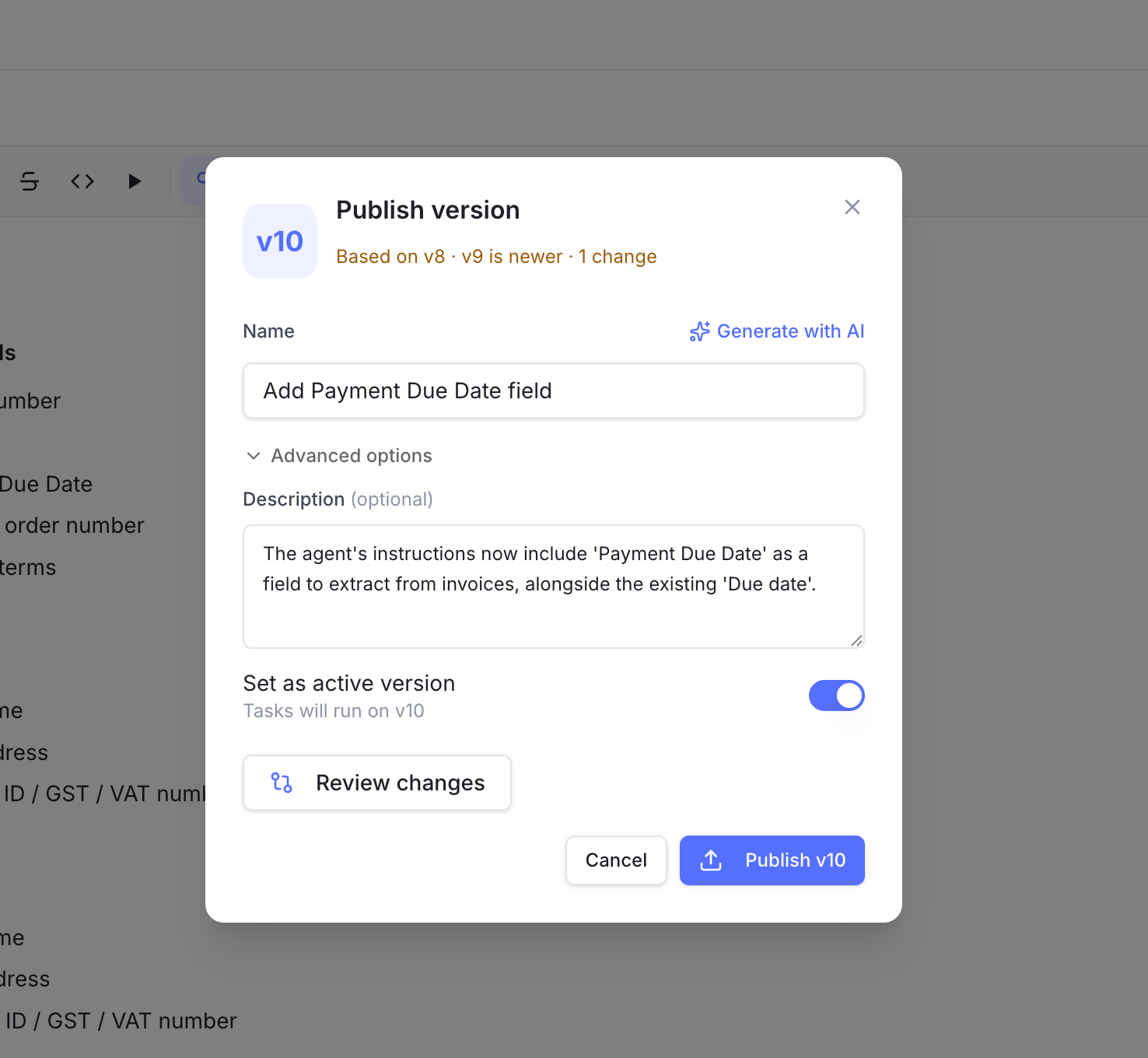
Publish version dialog with the version number, summary fields, review action, and active-version option.
Active versions
The active version is the version tasks run on by default. Use this workflow to change an agent safely:- Edit the draft.
- Review the draft changes.
- Publish a new version.
- Make it active when you want live tasks to use it.
View version history
Open the version chip in the agent editor to see version history. In version history, you can:- See every published version.
- See which version is active.
- View what changed in a version.
- See who published it and when.
- Switch the active version.
- Discard draft changes and return to the active version.
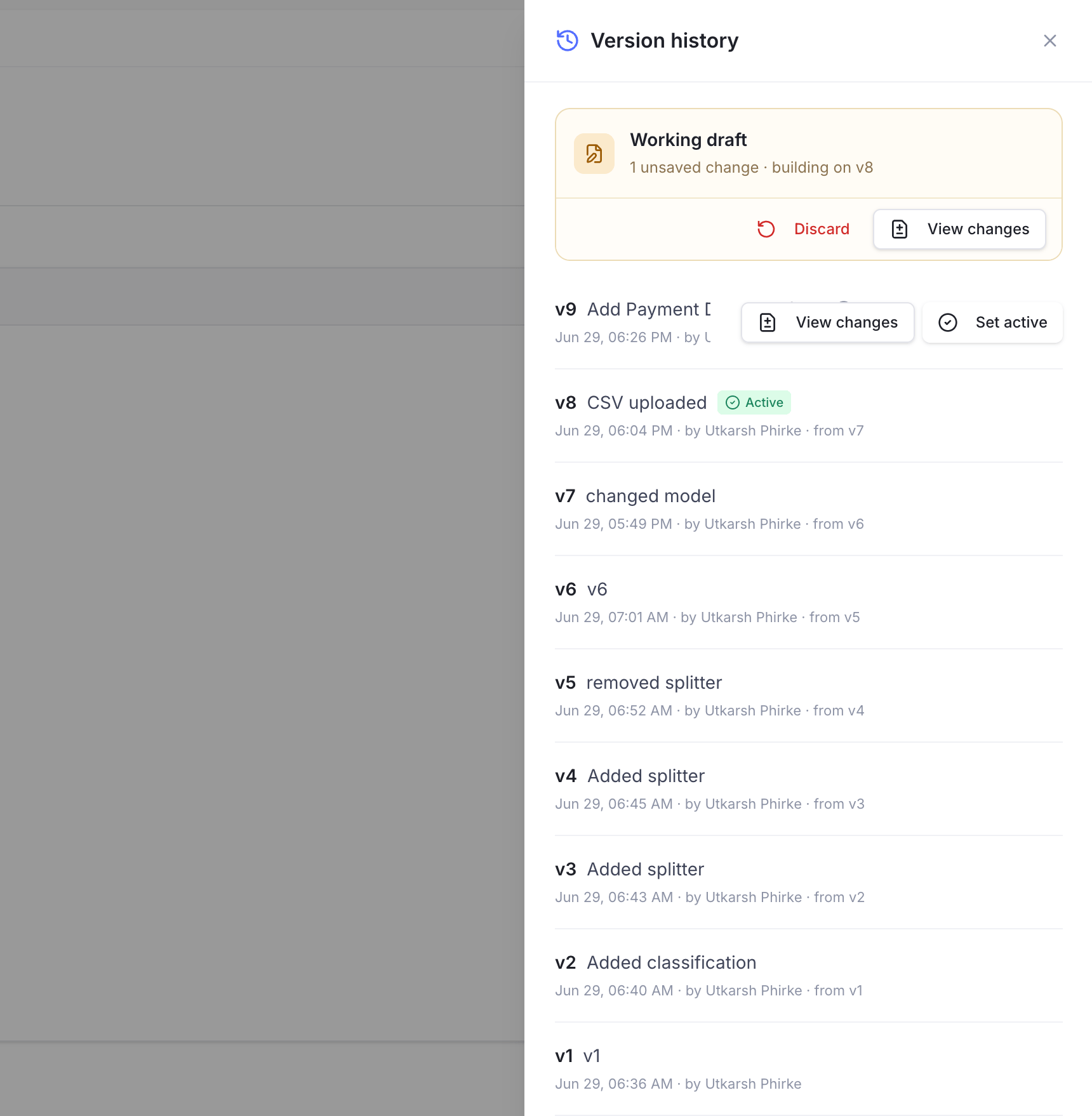
Version history shows the working draft, published versions, active version, and version actions.
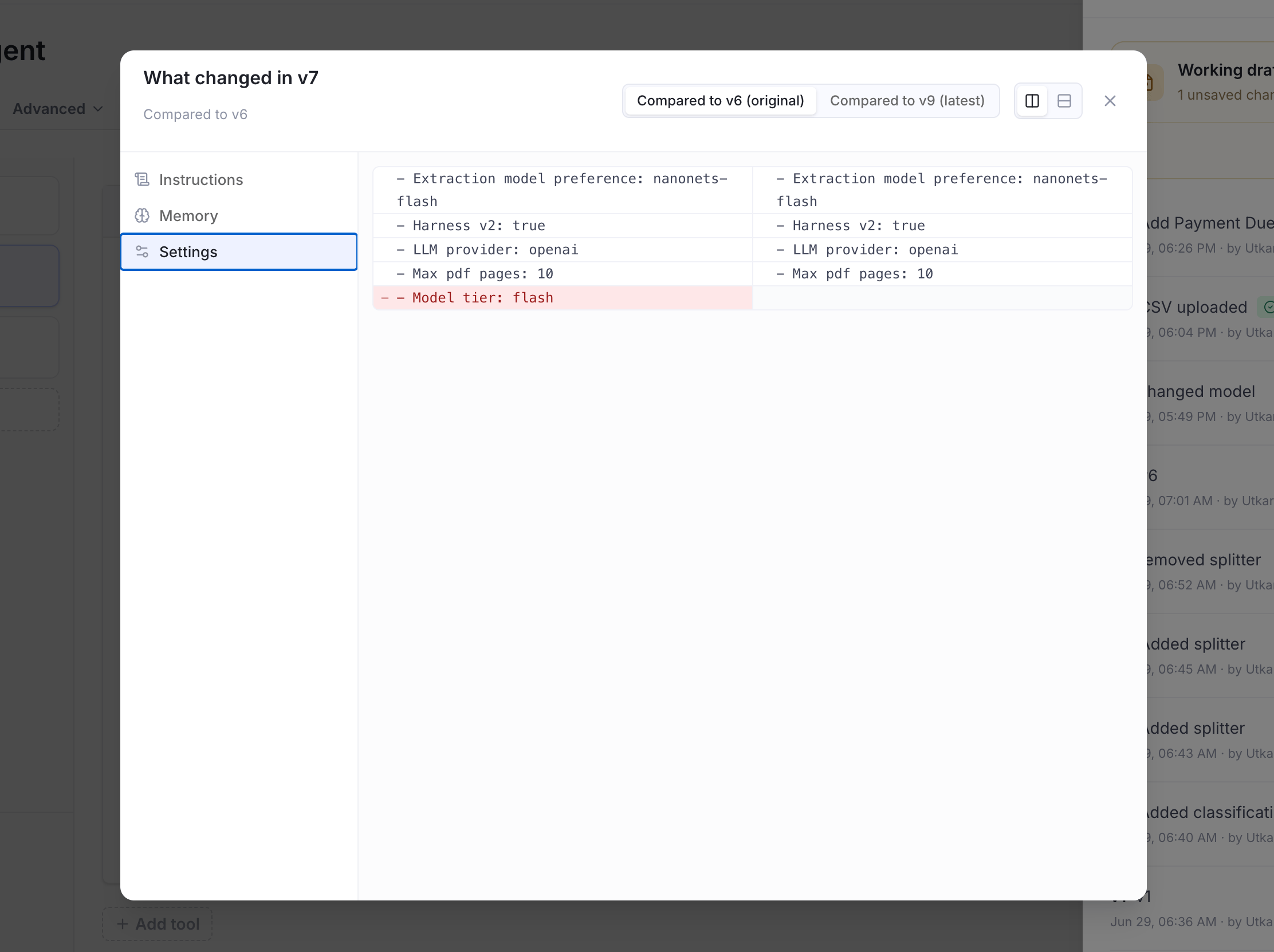
View changes shows what changed between versions.
Run a specific version
When starting a task manually, open Run on version in the composer to choose what runs:- Latest draft - run your current unpublished changes. Tasks started this way are labelled Draft run.
- A specific published version, such as v2 - useful for testing an older version, comparing behavior, or reproducing a past run.
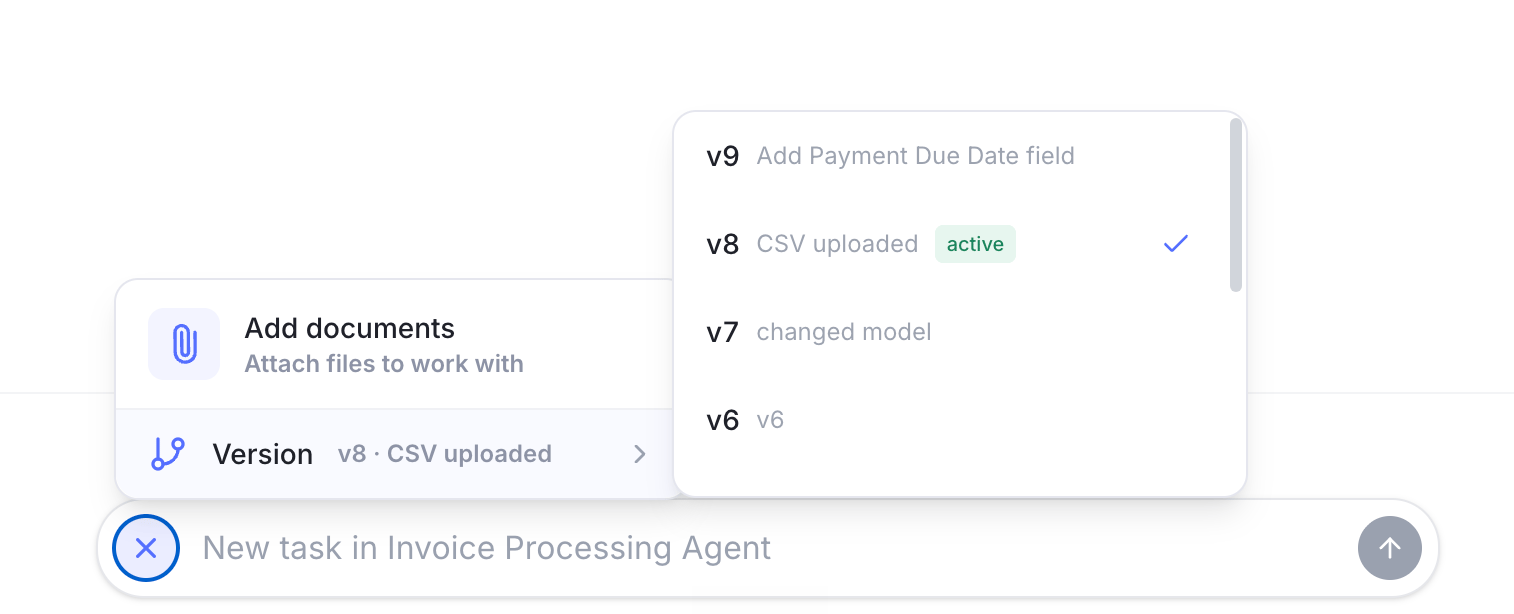
Run on version lets you choose the latest draft or a published version for a manual task.
Common workflows
Safely update a live agent
- Make changes in the draft.
- Review the changes.
- Publish a new version.
- Set the new version active when ready.
Save a version without changing live tasks
- Make changes in the draft.
- Publish the version.
- Leave the current active version unchanged.
Test changes before making them live
- Make changes in the draft.
- Start a manual task in the UI - it runs your draft (on a Live agent, pick Latest draft from Run on version). No publish needed.
- If the test looks good, publish a version and set it active so the API and triggers pick it up.
Roll back to an older version
- Open version history.
- Find the version you want to restore.
- Select Set active.